
Outgoing Chief Justice of India BR Gavai defends the Supreme Court's verdict on governors' powers, emphasizing the principle of separation of powers and judicial independence.
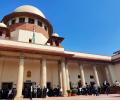
Justice Gavai, who wrote a 281-page separate but concurring verdict, said it is the duty of the State to give preferential treatment to the backward class of citizens who are not adequately represented in government jobs.

Speaking to ANI on Tuesday, Rakesh Kishore said that he was hurt by the CJI's remarks while dismissing a plea seeking restoration of the structure of Lord Vishnu in the Javari temple in Khajuraho.

The NCERT's class 8 textbook is under scrutiny for its content on judicial corruption, potentially leading to its removal after government concerns and objections from the judiciary.

The Supreme Court of India has issued pan-India guidelines on property demolition, emphasizing that no property should be demolished without a prior show cause notice and 15 days for the affected party to respond. The court strongly criticized 'bulldozer justice', stating that the Executive cannot demolish homes simply because individuals are accused of a crime. The verdict cites the importance of shelter as a fundamental right and highlights the unconstitutionality of demolishing houses based solely on accusations or convictions.
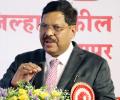
Chief Justice of India Bhushan Ramkrishna Gavai spoke about Dr. B R Ambedkar's views on the supremacy of the Constitution and the need for an independent judiciary.
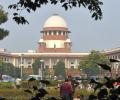
The Supreme Court has scheduled hearings starting August 19 for the Presidential Reference concerning constitutional issues related to timelines for handling bills passed by state assemblies. The court has directed the Centre and states to submit written arguments by August 12.

The Supreme Court of India has stayed several key provisions of the Waqf (Amendment) Act, 2025, citing potential violations of the Constitution. The court emphasized that laws should only be stayed in rare cases where provisions are manifestly unconstitutional or violate fundamental rights.

The Supreme Court of India has advised a petitioner, who claims to have suffered disability due to the side effects of the first dose of a Covid-19 vaccine, to file a suit for damages instead of pursuing his plea before the court. The court suggested that filing a suit could provide quicker relief than waiting for a potentially lengthy decision on the petition.
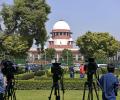
A Supreme Court bench, which was assigned a case by another bench of equal strength, has said orders pertaining to placing a case before benches can only be passed by the Chief Justice of India.
The Supreme Court of India has expressed concern over a growing trend of litigants and lawyers making scandalous allegations against judges when court rulings are unfavorable. The court cautioned against such conduct, emphasizing the duty of lawyers to uphold the integrity of the judicial system.

On Thursday, MMRDA strongly defended its decision to disqualify L&T from the two infrastructure projects in Mumbai, citing "substantial grounds" for the rejection of its technical bids.
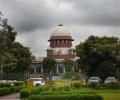
The Supreme Court of India has sought responses from the Centre and others on a petition challenging the constitutional validity of certain provisions of the Waqf Act, 1995. The petition argues that the Act gives undue favor to waqf properties and deprives non-Muslims of their property rights. The court has tagged the petition with pending petitions that raise similar issues.

The Supreme Court is examining the extent to which courts can intervene when governors delay or refuse to act on bills passed by state assemblies. The court questioned the Centre on whether judicial review is barred in cases of gubernatorial inaction, sparking debate on the balance of power between states and the central government.
The Supreme Court has expressed serious concern over the rising cases of digital arrest cybercrime in India, where fraudsters extort money from victims by posing as law enforcement officials. The court has vowed to deal with such cases with an iron hand and has sought reports from the Ministry of Home Affairs and the CBI.
The Supreme Court has stayed the Calcutta High Court's decision that stalled the implementation of a revised list of Other Backward Classes (OBCs) in West Bengal, providing relief to the state government.

The Supreme Court declined to initiate contempt action against a lawyer who hurled a shoe at the Chief Justice of India, citing the CJI's own refusal to proceed against him. The court is considering guidelines to prevent such incidents.
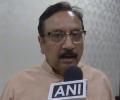
A bench of Justices Surya Kant and N Kotiswar Singh deferred the hearing on Shah's plea after his counsel and senior advocate Maninder Singh made a request.
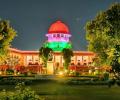
The Centre told the Supreme Court that governors are not indefinitely sitting on bills passed by state legislatures, and that barring a few exceptions, most have acted in a way which the apex court would have perhaps desired. Solicitor General Tushar Mehta argued that a Governor is "not a rubber stamp" and has a duty to preserve, protect, and defend the Constitution.
The Supreme Court has restrained lower courts from releasing the accused in a digital arrest fraud case where a 72-year-old lawyer was duped of Rs 3.29 crore. The court expressed concern over the growing cybercrime and the targeting of elderly citizens.
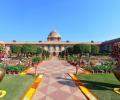
The Supreme Court has ruled that a Governor cannot send bills to the President for consideration if the state assembly has already cleared them for a second time. The court was questioning the Centre over the powers of the Governor when it comes to granting assent to bills.

A lawyer allegedly attempted to throw a shoe at Chief Justice of India BR Gavai during court proceedings. Security intervened, and the lawyer was removed from the premises. The CJI remained composed and continued with the proceedings.

The Supreme Court has refused to hear a plea by the Shiromani Gurdwara Parbandhak Committee (SGPC) challenging the temporary release of Dera Sacha Sauda chief Gurmeet Ram Rahim Singh. The court noted that Singh's counsel objected to the maintainability of the PIL before the high court, which was disposed of on the ground that it was filed against a single person, Singh. The bench said it was not inclined to consider the present petition. Singh is serving a 20-year jail term for raping two of his disciples.

The Supreme Court of India has made public the asset details of its judges, including Chief Justice Sanjiv Khanna who has Rs 55.75 lakh in a fixed deposit, a three-bedroom DDA flat in south Delhi, and a four-bedroom apartment measuring 2,446 square feet in the Commonwealth Games Village. The court has also uploaded the complete process of appointments to the high courts and the Supreme Court on its website for public awareness.

A bench of Justices BR Gavai and Abhay S Oka said the governments must ensure that action is taken against erring officials.
The Supreme Court of India has sought responses from the Centre and others on a petition challenging the blocking of the YouTube channel '4PM'. The petitioner, Sanjay Sharma, the Editor of the channel, alleges that the blocking order, issued by an intermediary based on an undisclosed direction from the Centre, violates his right to free speech and the public's right to information. The plea argues that the blocking was based on vague grounds of 'national security' and 'public order' without any opportunity to be heard. The court has issued notices to the Centre and others seeking their responses on the petition.
While agreeing to hear his petition on September 27 last year, the top court stayed the proceeding against Murugan that was pending in a special court in Chennai.
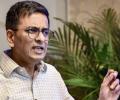
In an unprecedented move, the Supreme Court administration has written to the Centre for vacating the official residence of the Chief Justice of India at Krishna Menon Marg in New Delhi, noting that the current occupant ex-CJI D Y Chandrachud has stayed beyond the permissible period.

A bench comprising Justices BR Gavai and KV Viswanathan warned the probe agency and remarked it had moved a "frivolous petition" only because one of the accused was a high-profile person.

A five-judge bench of the Supreme Court will consider review pleas challenging the October 2023 verdict that declined legal sanction to same-sex marriage. The review pleas will be heard in chambers on January 9, with Justice P S Narasimha being the only member of the original bench that delivered the verdict.
The condition was imposed by the high court while ordering his release on bail in August 2022.

The Supreme Court of India will examine the jurisdiction of the Lokpal, India's anti-corruption ombudsman, in entertaining complaints against sitting high court judges. The court is considering a suo motu proceeding initiated over the Lokpal's January 27 order on the issue. The case involves two complaints filed against a sitting additional judge of a high court, alleging that he influenced a judge of the subordinate judiciary and a judge of the same high court set to deal with a suit filed against the complainant by a private company.

The trial incineration of 10 tonnes of waste from the Union Carbide plant in Bhopal, responsible for the 1984 gas tragedy, began on Friday afternoon in Pithampur, Madhya Pradesh. The process, ordered by the Madhya Pradesh High Court, is expected to take 72 hours to complete. The waste includes soil, reactor residues, pesticide residues, and other materials. The State Pollution Control Board says the chemicals in the waste have become "almost negligible" and there is no presence of methyl isocyanate gas. The incineration process is being monitored by the Pollution Control Board and broadcast live.

The first round of trial incineration of 10 tonnes of waste connected to the 1984 Bhopal Gas Tragedy has begun in Pithampur, Madhya Pradesh, amid tight security. The Supreme Court refused to intervene in the MP High Court's order directing the transfer and disposal of waste at a private company-operated plant in Pithampur. The trial incineration is being conducted in the presence of scientists from the central and state pollution control boards. Protesters have expressed apprehensions about harm to the human population and environment due to the disposal of this waste, but the state government has rejected these concerns, saying that solid arrangements are in place for safe disposal.
A seven-judge Constitution bench comprising Chief Justice DY Chandrachud and Justices BR Gavai, Vikram Nath, Bela Trivedi, Pankaj Mithal, Manoj Misra and Satish Chandra Sharma said there is no error apparent on the face of the record.
Legal experts had deplored the observation of the Allahabad high xourt on what constitutes a rape charge, calling for a restraint by judges and underlining the drop in public confidence in the judiciary due to such statements.
The Supreme Court of India has directed Uttar Pradesh authorities to respond to contempt proceedings for allegedly razing a portion of a mosque in Kushinagar, defying a previous court order. The court has also ordered a halt to any further demolition of the structure. The demolition was carried out despite a November 2024 Supreme Court ruling that barred demolition without a prior show cause notice and a 15-day response period. The petitioners allege the demolition was carried out in violation of legal process and the Supreme Court's guidelines, as well as without providing an opportunity for a hearing.
A Constitution bench comprising Chief Justice B R Gavai and Justices Surya Kant, Vikram Nath, P S Narasimha and A S Chandurkar, would fix the timelines on July 29 and commence hearing on the presidential reference in mid-August.
A five-judge Constitution bench of the Supreme Court is scheduled to consider the Presidential reference on whether timelines could be imposed by judicial orders for the exercise of discretion by the President while dealing with bills passed by state assemblies.

The counsel appearing for the state said it was aggrieved by some comments made in the high court order.
 © 2026 Rediff.com - Advertise with us - Disclaimer - Privacy Policy - Sitemap - Feedback - About us - Terms of use - Grievances